Educating your child is for primary school? Parent-child education is more important

Parents Zone

Written by:  Octopus parent, Mr. Leung Wing Lok

I remember when my eldest son, Hay, was in K1, I wrote, “Son, are you happy to start school? I ask my child “Are you happy?” one school year later. I don’t have to consider answer. My wife and I are very happy and thankful for the love and effort of the kindergarten, and Hay is very happy every day and is eager to go to school every day (especially to meet the teachers). Someone reminded me, “I’ll ask you again when you’re ready to apply for Primary One, are you happy? It’s just like a tray of cold water pouring on me.

Entering elementary school becomes the biggest shadow for parents?

I have heard many parents tell me that the biggest shadow in the three years of kindergarten is the promotion to primary school, how much do I have to do for my child? Should we arrange for interview classes? Should we take remedial classes in English or manners (no mistake, there are really training classes in the market to take remedial classes in manners)? Or is it enough to have 16 out of 18 arts? Or should we learn a cold skill to stand out from the crowd? For example, learning magic or acrobatics. Both parents and children are busy remembering to enjoy happy parent-child time, especially when all activities have a purpose, the mentality changes accordingly, and children may no longer be interested in interest classes.

 

Parents are worried about choosing their favorite elementary schools and making a resume

Especially when K3 students enter the “school enrollment season” in June, parents and children are faced with the choice of enrolling in 10 or 8 elementary schools. As a father, you would like to enroll in only one or two elementary schools of your choice, but will you be able to bear the responsibility of “no school for your son”?

Another problem is to make a resume, how beautiful does it have to be? Many schools say they will only accept a maximum of four pages, but I have seen other parents writing “work reports” for their children that are as thick as prospectuses and as beautiful as the Apple computer’s profile book. If you look at your child, you don’t see that he is particularly awake, nor is he a super “pretty boy”, are you brave enough to make a 4-page resume?
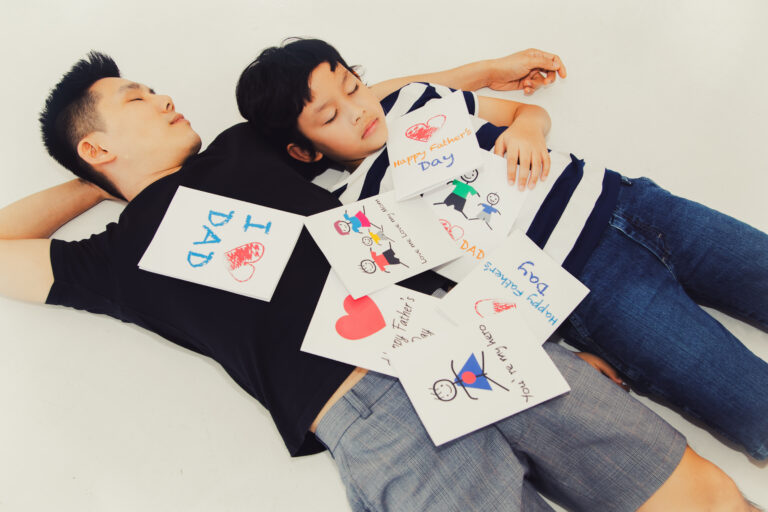
“The choice between “promotion to primary school” and “being a human being

To sum up what Hay has learned in kindergarten over the past year. The most precious thing is not how good the “academic performance” is, but learning to get along with others and being polite. Of course, I am most grateful for the teacher’s special instruction to Hay to “love Daddy and work hard”, so that I can change from “someone I don’t see all the time” to “someone I cherish seeing” in my child’s mind. This kind of education may not be helpful for the promotion to primary school, but it is a value that is cherished between parents and children for a lifetime

Think about it, does kindergarten specialize in nurturing your child to “go on to primary school” or to “be a human being”? Similarly, as a parent, do you educate your child only for the purpose of “moving up to primary school”?
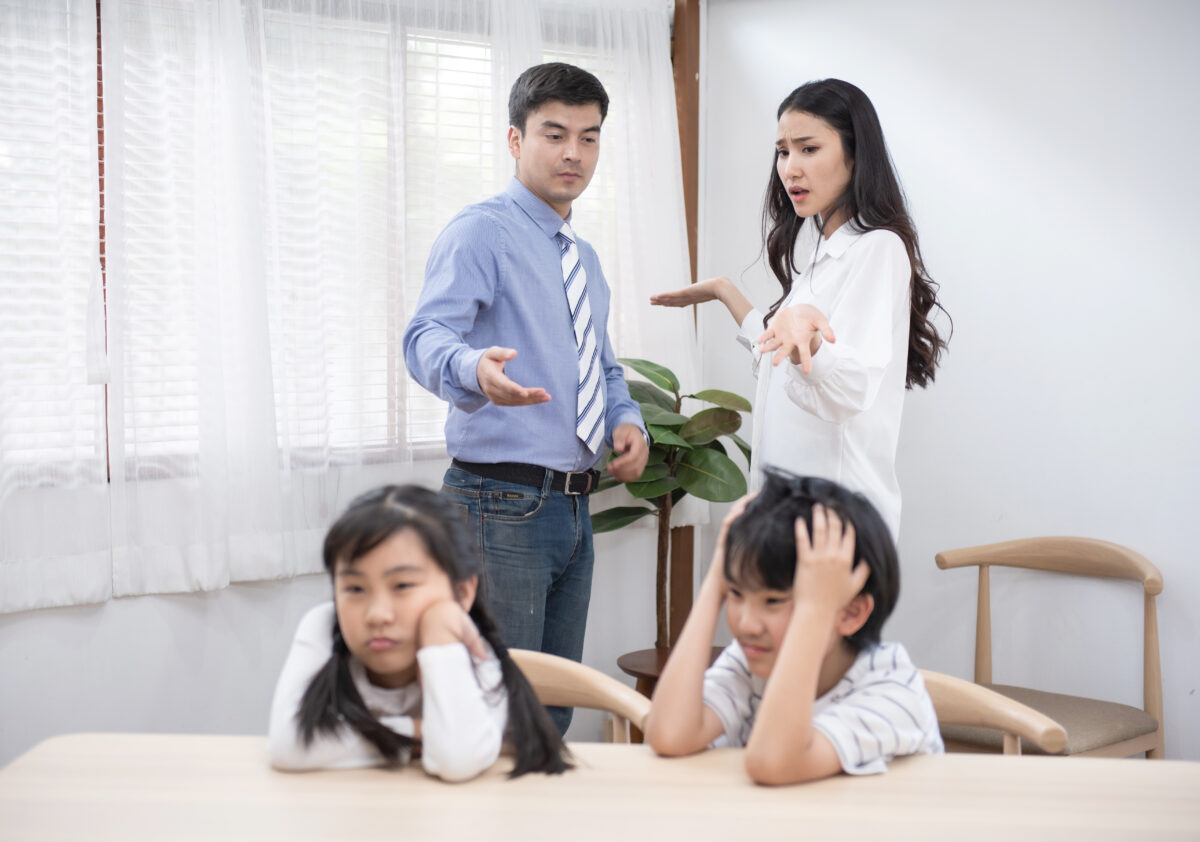

Four behaviors that damage the parent-child relationship

Source: Senior Parenting Expert, Bally


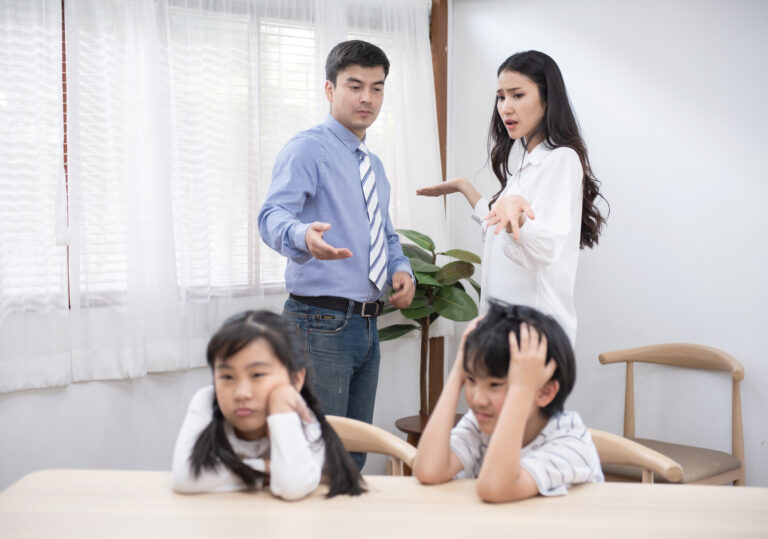
Many parents often ask, “Why is the child so disobedient?” “Why does he hate me so much?” or “He is ignoring me more and more.” In fact, there are four types of behaviors that, over time, will cause our children to despise themselves. Many of the parents that I have met in my day-to-day life often unconsciously say or do things that make their children hate themselves. This is what parents do not notice.

First, comparison. We frequently ask children, “Why are you like this?” “Your younger brother is not like you; he is very neat,” and “look at the students next to me; they listen to their parents. “When we often express ourselves in a “comparison” manner, children will feel disgusted when they hear their mothers’ voice.

Second, when children do something wrong, parents often overlook the motives behind their behavior. When we find out that a child is doing something wrong, we should first understand what the child is trying to accomplish with the behavior. Do not rule out that they are trying to do something right. Maybe he wants to pour a glass of water for his parents or his brother, or he is not doing his homework well, but in fact, he is doing his best and is just mentally tired.

When he is not doing well, we can first praise his behavior by saying, “Thanks; I know you are nice and want to pour water for us, but don’t spill water again.” “It’s dangerous,” or “Don’t walk so fast.” After we praise the child, he will understand that he is doing the right thing, and then he will listen to his parent’s advice and improvement.

Third, parents should pay attention to the end of the day if, in fact, they are full of negative energy and bring emotions into the home. When parents see that their children are not behaving in a satisfactory manner, they may take out their emotions on them in a series of ways. This is not fair to the child, who may have made only a few mistakes but is being blamed for a series of them.

Fourth, parents should be very careful that expressions of anger will misinform their children with inaccurate information. For example, “If you do this, you might not be my son.” When we mistakenly use such an aggressive word, it can be very harmful to the child.

Parents should never commit these four behaviors while children are growing up, or they will hate their parents from an early age.

Children are reluctant to open their mouths. Does listening to music help?

Parents Zone

Written By: Pang Chi Wah, Certified Educational Psychologist, New Horizons Development Centre   


Parents expect their children to learn to speak, and the feeling of their children “opening their mouths” for the first time is something that only parents can understand. Parents want their children to start talking as soon as possible and do everything they can to guide their children to speak. While oral training is important for the development of speech, parents should not neglect auditory training because it is an important prerequisite for language training.


Relationship between Auditory Stimulation and Speech Expression

Listening and expression, reception and output, are closely related and complement each other. In the early childhood stage, if a child’s reception is not sufficient, it has a direct impact on the amount of output. I give a more extreme example for analysis. People with hearing impairment have difficulties in speech expression, but this is not due to the problems with their oral muscles or related abilities but to the lack of auditory input. Without the verification and comparison of sound content, even though the mouth is developing normally, there is no “inventory” and therefore no “supply”. Therefore, parents should pay attention to whether they are providing their children with adequate auditory stimulation.


Diversified auditory stimulation

Some parents may say, “Of course I know this, and I try to output a lot of sound to my child: I often talk to my child, tell stories, describe my child’s surroundings, etc., and I use different languages to do so. While this is ideal for auditory stimulation, the content is rich but similar in nature – it is all verbal. In fact, auditory reception can be very diverse, and music, for example, is a material that can help improve a child’s language skills. Conversely, parents can learn about their children’s language development by how well they listen to music.


Music is good for language development

From my years of experience in education, I found that children with poor phonetic ability will have more difficulty in learning music and vocal music, such as pitch, rhythm, range, etc. This is actually related to listening and sound composition skills. Among the different types of sounds, music is the ideal language teaching material, except for the human language. There is a wide variety of music, with different rhythms or themes, from which children can broaden their understanding of sound. In addition to its educational value, some soft music can even help to soothe emotions.


Play the harmonica and experience the sound and breathing changes


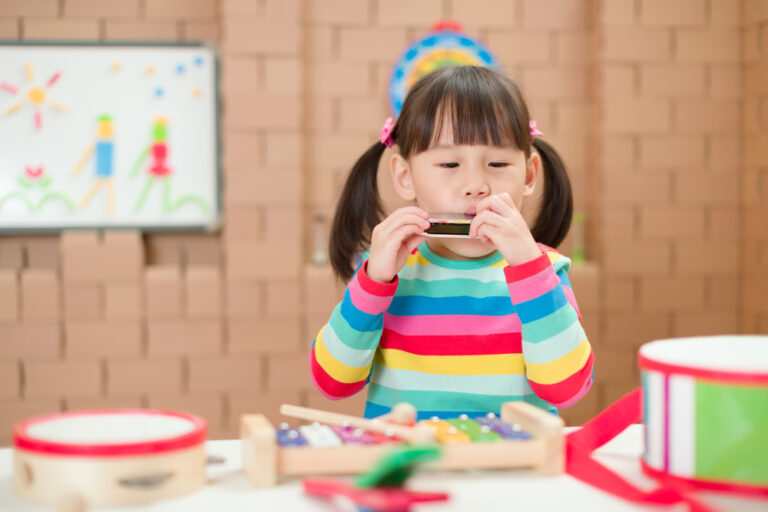
The same piece of music can feel very different when played by different instruments. This is also good training for your child’s listening sensitivity. In addition to listening to records or playing music files on the computer, it is fun and meaningful for children to get in touch with real instruments and actually play them so that they are more aware of the relationship between different materials and sounds. Harmonica is a good training tool among many musical instruments. When playing the harmonica, children need to exhale through their mouths, thus having the opportunity to experience the changes between sound and breathing. When children play the harmonica, they use their tongues and lips to create sounds that are coordinated with each other, which is an important foundation for the use of the mouth. 

Singing children’s songs to learn to speak


In addition to imitating everyday conversations, singing a cute children’s song can have the desired effect of enhancing memory and deepening impressions by using music to carry language. If children can sing along, even if they can’t produce the right sounds at first, they can develop their speaking skills during the imitation process.

A building is built from the ground up, and training in early childhood is very important for children to have good language skills in the future. Through the use of music and musical instruments, children can build a good language foundation in a fun and relaxing way, so parents may want to try it out more often.

“No!” “Not allowed!” “No!” Does it really work?

Parents Zone

Written by : Child Behavioral Emotional Therapist, Ip Wai Lun

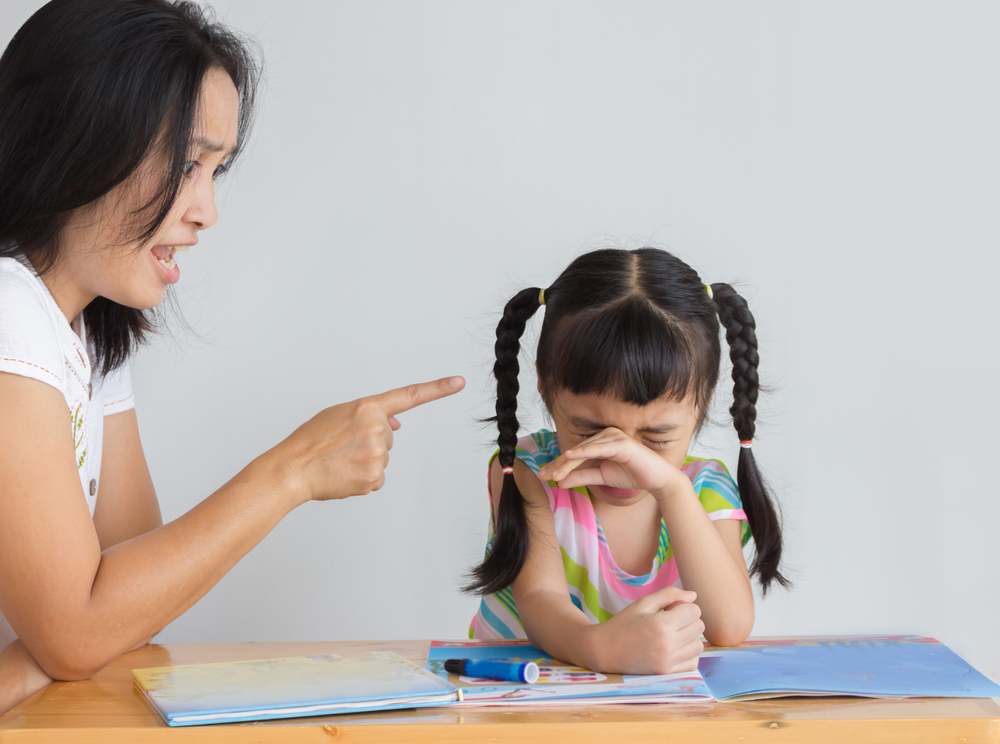
Many times, parents get angry because their children don’t follow the rules or challenge some bottom line. For example, if a parent doesn’t want a child to touch something, the parent will just say, “Hey! Don’t touch it!” and “No!” and “Stop”, the child will hear many of these “No! and “No! In fact, this will often make children feel that they have done something wrong, which in turn will undermine their confidence and make them avoid doing things in the future.

As a parent, what can you do to make your child follow the rules without undermining his self-confidence? What kind of talking skills can parents use?

For example, if a child is angry and his face is red, we can use the following “three-step” approach.

Part I: Say How He Feels
“Mommy and Daddy see how angry you are ……”
“Look at your red face. ……”
Parents can try to help their children say how they feel. This is the first and most important step.


Part 2: Setting boundaries
When a child has a temper tantrum and may hit someone, parents should immediately set a line: “Okay, we can’t hurt others. Help him to set a compliance line.


Part 3: Arranging a platform for diversion
If the child has already hit someone, the parent should arrange a platform for the child to channel the anger.

For example, the parent can say, “Oh! I see you are so angry that your face is red and you want to hit someone! Why don’t you show Daddy how angry you are? “Why don’t you hit this shark doll?”

Maybe the child will say, “Yes, okay! and then hit the shark doll. At this point, the parent should tell the child, “Oh, Daddy can really see that you are very angry.  


By allowing the child to express his or her emotions, the child will understand that when he or she has negative emotions, they will be accepted by the parents.

If parents use the above three steps, not only will they accept their children’s negative emotions, but also they will not condone their misbehavior, and most importantly, children will learn to follow the rules.

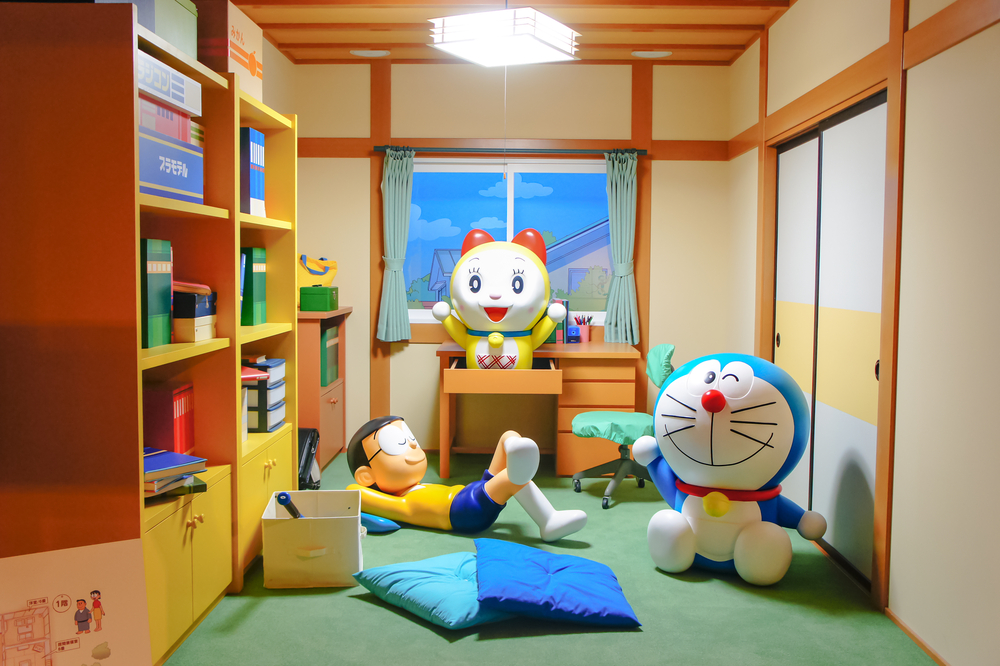
If Nobita Nobi did not have Doraemon

Parents Zone

When I was a child, I loved watching the Japanese comic Doraemon, but what would happen if the real Nobita did not have the magic of Doraemon, what will happen? How can we improve the time management skills of children so that they do not become the real Nobita?

The characters in “Doraemon” are vivid and lively, with distinctive personalities – the gentle and quiet Shizuka, the bullying Takeshi, love showing off wealth Suneo, the magical Doraemon …… but the one that impresses me most is the timid and often troublesome Nobita, especially his philosophy of “don’t do anything today if you can put it off until tomorrow” is a classic lazy person’s reflection.

I remember one of the stories: Nobita consistent with his character of procrastinating things again and again, to the day before the test to start studying, the results cannot cope with and have to ask for help from Doraemon. Doraemon took out the magic – memory bread to help him, as long as Nobita printed the textbook content on the bread, and then eat, he will remember the knowledge printed on the bread. Nobita was happy about this at first, but because the content of the text was too much, he had to eat a lot of bread to remember all the knowledge, and as a result, he ate too much and his stomach could not stand it!. After he had a bowel movement, all the knowledge was washed away with his stool, and he scored a zero on the test. This is exactly what the Chinese saying goes: “Clutching the Buddha’s leg in a hurry “, and lap up information without  fully digesting it will not yield good results.

I wonder if you have ever met someone like Nobita? These people usually lack a sense of responsibility, because they are not interested in the work handed down by their teachers/parents/supervisors, but they can’t put it off, so they have to put it off until the last minute to finish it. Due to the lack of time, the performance is naturally unsatisfactory; but there is another type of people who really want to do a good job, but unfortunately the concept of time is weak, or the work is too simple to think, to complete the work to be completed in 10 days only arranged in three days, the result is also due to the lack of time, have to drive at night to catch the deadline, the performance is naturally less than expected.

In the comic, Nobita’s son and grandson, Nobby, is living in poverty because of Nobita’s poor ancestors. In order to change the quality of life, he sent Doraemon back to the 20th century when Nobita was a child, hoping that he can use magic treasures to help Nobita, and thus change fate. Doraemon also really in Nobita every time he encountered a crisis to help him with magic. But I think, if Doraemon does not change Nobita’s bad nature, the problem will only keep repeating itself.

Categories
Parents Zone Parents Zone Parents Zone Parents Zone Parents Zone Parents Zone Parents Zone

Let your child learn to face failure

Parents Zone

Written by: Director of Curriculum and Training, Financial Education Association,  Mr. Kwan Hin Bun


In many cases, the biggest blow to a child is not the failure itself, but his or her understanding of the failure. For example, if a child is not selected to represent the school in an inter-school competition, the usual reason they think of is that they are not as good as their classmates. But there may be other reasons behind it. Maybe the teacher is worried that if he gets hurt, he won’t be able to represent the school in other more important competitions. This is not to teach children to avoid responsibility, but sometimes we need to make them understand that it is indeed their own factors that lead to failure.

Parents need to remind their children that anyone who starts something will always have difficulty. Parents should encourage their children to persevere to the end, without taking the requirement of perfection too seriously. Don’t be impatient to provide help to your child; let them try to meet the challenge in a different way. For example, if your child has difficulty learning to write Chinese characters, let him or her copy them first.

As children, their attitudes toward people and things around them are often unstable and easily influenced by emotions and other factors. When faced with difficulties and failures, they tend to develop negative emotions and fail to deal with failures with the right attitude, thus creating resilience. At this time, parents should tell their children in time, failure is not terrible, as long as a little brave can do a good job, learn from the failure to see how to do next time. Parents should consciously use their children’s failures as educational opportunities to guide their children to regain their courage and try again with boldness and confidence. At the same time, educate your child to face difficulties and setbacks, to improve the ability to overcome difficulties and resilience.

In life, no one can remain unbeaten for a long time, like China’s “hurdle king” Liu Xiang who also lost in the London Olympics. Only those who are brave enough to face failure will have the chance to show their smiles of success again.

Parents should know how to teach their children to be brave in the face of failure, because no one is always successful in life. We understand from childhood that “failure is the mother of success”, so there is nothing to be afraid of when we face up to failure. However, if we look at our understanding of this statement, we should focus on “success” rather than “failure”, so that our recognition of failure is still conditional. When failure is no guarantee of future success, Failure, is still a shame and a sin. Therefore, parents must be clear about whether they are teaching their children to face failure or to avoid it!

24-25年度小一派位結果 (最多本校學生升讀的學校)

24-25年度小一派位結果 (最多本校學生升讀的學校)